
Handing a car down to your kid, your spouse, or a grandchild is one of the easiest title transfers Minnesota has. It is also one of the easiest to get wrong, because the tax break only covers some relatives, not all of them. This guide walks you through who qualifies, what it actually costs, and exactly what to sign so the deputy registrar does not send you home.
The short answer: The owner signs the title over and writes GIFT as the price, and the new owner files it at a deputy registrar or by mail. Gifts between spouses, parents and children, or grandparents and grandchildren owe no sales tax, only about $37 in fees. Siblings, in-laws and friends pay 6.875% of the car’s value. No notary and no gift form.
Updated November 3, 2026. Checked against Minnesota Driver and Vehicle Services (DVS), the Minnesota Department of Revenue and the Minnesota Statutes. Sources are linked at the bottom.
Buying a car to give instead of handing down the old one? See Minnesota cars under $5,000 up for auction, open to the public with no dealer license needed.
Know someone in Minnesota who needs a car but can’t afford one? You can nominate them for the Remarket Space Car Program.
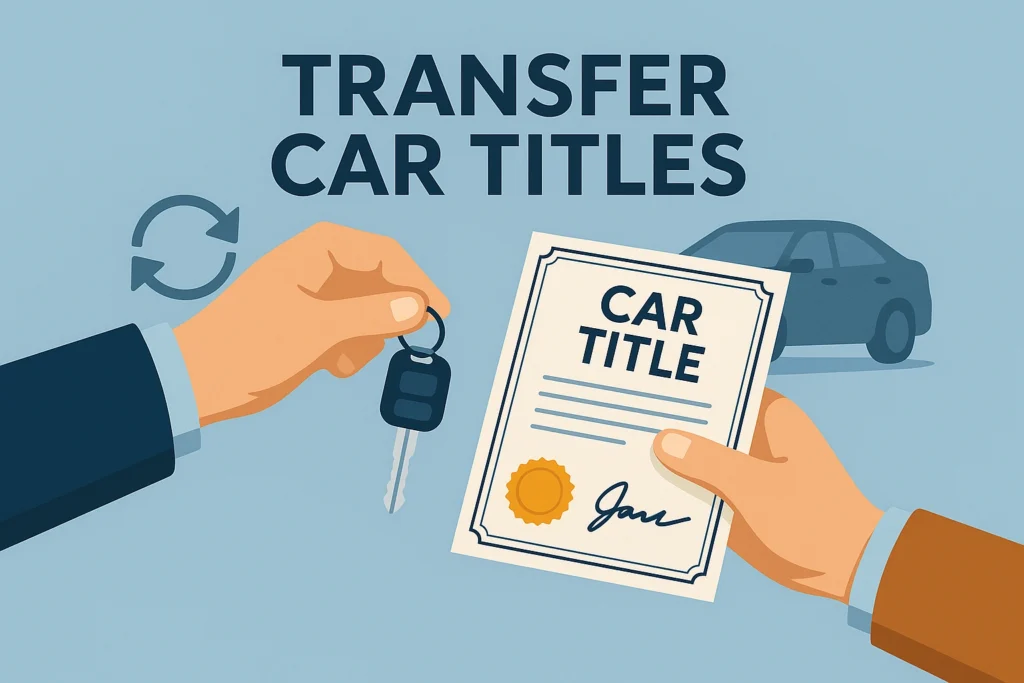
Key takeaways
- Tax free: spouses, parents and children, grandparents and grandchildren, and qualifying foster parents and foster children. Divorce transfers and inheritances are exempt too.
- Not tax free: brothers and sisters, aunts and uncles, nieces and nephews, cousins, in-laws, and friends. They pay 6.875% of the car’s value, or a flat $10 if the car is 10 or more model years old and worth under $3,000.
- Cost: about $37 in fees for a qualifying family gift, plus registration tax only if the tabs are expired.
- Paperwork: the original title, signed by everyone on both sides. No notary and no separate gift affidavit.
- Deadline: file within 10 days to keep the plates and registration credit. After 20 calendar days DVS adds a $2 late fee, and after 30 days it can suspend the registration.
Who pays sales tax on a gifted car in Minnesota, by relationship?
Minnesota law is narrow here. A car given as a gift is exempt from motor vehicle sales tax only when it goes between the relationships marked exempt below. Everyone else is treated like a buyer, even if no money changes hands, and pays tax on the car’s fair market value.
| Who gets the car | Sales tax | Notes |
|---|---|---|
| Spouse | None, exempt | Gift between spouses |
| Your child, or your parent | None, exempt | Works in either direction |
| Your grandchild, or your grandparent | None, exempt | Works in either direction |
| Foster child or foster parent | None, exempt | Only if the home is or was a licensed foster home and the county verifies the child was a state ward or in permanent foster care |
| Ex-spouse in a divorce | None, exempt | Agreed or court-ordered, as part of the divorce proceeding |
| Heir, after the owner dies | None, exempt | Any relationship, by inheritance or transfer-on-death |
| Your own revocable trust | None, exempt | From you into your own revocable trust |
| Brother or sister | 6.875% of fair market value | Flat $10 instead if the car is 10 or more model years old and worth under $3,000 |
| Aunt, uncle, niece, nephew, or cousin | 6.875% of fair market value | Same $10 rule for older, low-value cars |
| Son-in-law, daughter-in-law, or other in-laws | 6.875% of fair market value | Same $10 rule for older, low-value cars |
| Boyfriend, girlfriend, or friend | 6.875% of fair market value | Same $10 rule for older, low-value cars |
The sibling mistake is the one we see most. Plenty of people assume a brother or sister counts as immediate family. For vehicle sales tax in Minnesota, they do not. If you are gifting a car to a sibling, plan for the tax before you go to the counter.
How much does it cost to transfer a car title to a family member in Minnesota?
The title fee itself is $8.25, but that is not what you will pay at the counter. Here is the full stack of state fees on a typical family gift processed at a deputy registrar office:
| Fee | Amount | When it applies |
|---|---|---|
| Title fee | $8.25 | Every new title |
| Filing fee | $12.00 | Every title transaction |
| Transfer tax | $10.00 | Most ownership transfers |
| Public safety vehicle fee | $3.50 | Most title transactions |
| Technology surcharge | $2.25 | Every title transaction |
| Local office surcharge | $1.00 | When filed at a deputy registrar |
| Typical total for a tax-exempt family gift | $37.00 | |
| Lien recording | $2.00 each | Only if the new owner puts a loan on the car |
| Late transfer penalty | $2.00 | If filed more than 20 days after the gift |
| Registration tax | Varies | Only if the tabs are expired |
What the sales tax looks like when the gift does not qualify
When a gift goes to someone outside the exempt list, Minnesota taxes it at 6.875% of the car’s fair market value, meaning the average value of similar vehicles, not the $0 you wrote on the title. Two real-world examples:
- A 2019 SUV worth about $18,000, gifted to your sister: roughly $1,237.50 in sales tax, plus the fees above.
- A 2013 sedan worth about $2,500, gifted to your nephew: a flat $10 in-lieu tax, because the car is 10 or more model years old and worth under $3,000.
Not sure what the car is worth? Look up what similar vehicles actually sold for on our Minnesota auction sold prices page. For the full breakdown of every Minnesota title fee, see our guide to what it costs to transfer a car title in Minnesota.
What changed for 2026?
The rules did not change. We rechecked every fee and exemption on November 3, 2026. The DVS fee schedule and the gift exemptions in Minnesota Statutes 297B.01 match what this guide already said. The 6.875% rate has applied to vehicle sales since July 1, 2023, and DVS no longer uses the old gift affidavit, form PS2080.
One correction on our side: earlier versions of this guide said the law gives you 10 days to file. Ten days is when the new owner’s right to the plates and registration credit runs out, and when the giver should report the transfer. The $2 late fee starts after 20 calendar days.
How to transfer a car title to a family member in Minnesota, step by step
DVS recommends that both of you go to the deputy registrar office together. If that is not possible, the person giving the car has to hand over everything the new owner needs to finish the job alone.
- 1. Find the current title. The transfer has to happen on the most recent title issued. If it is lost, the owner on record must get a duplicate Minnesota title first.
- 2. Clear any loan. If a lender is listed on the title, the owner needs a lien release card or a notarized lien release from that lender. This is the only piece of the process that involves a notary.
- 3. The giver fills out the assignment section. Every owner listed on the title prints and signs their name, enters the date, and completes the odometer and damage disclosures. Write GIFT where the purchase price goes. Odometer disclosure is required on model year 2011 and newer vehicles for 20 years. Our guide on how to sign a Minnesota title shows exactly which boxes to use.
- 4. The new owner completes the application section. Full legal name, date of birth, address, and signature for every new owner, plus whether there is a loan on the car. If the title does not have room, use the Application to Title and Register a Vehicle (PS2000).
- 5. Get insurance in the new owner’s name. Minnesota requires it before the car hits the road, and the old owner’s policy should come off the car.
- 6. File within 10 days. Take the signed title to any deputy registrar office, or mail it to DVS, with payment for the fees. Tell the clerk it is a gift and how you are related. Filing after 20 calendar days adds a $2 late fee.
- 7. The giver reports the transfer within 10 days. Report the car as sold or donated through DVS online services and keep the Seller’s Notice of Sale portion of the title. This protects the old owner from parking tickets or liability tied to the car after it leaves their hands.
- 8. Watch the mail. DVS mails the new title. Keep your receipt and a photo of the signed title until it shows up.
Documents checklist
- The original, most recent Minnesota certificate of title, signed by every owner and every new owner
- Lien release card or notarized lien release, if a lender is listed
- Form PS2000, only if the title has no room or needs a separate application
- The new owner’s driver’s license or state ID
- Proof of insurance for the new owner
- Payment for the fees. Deputy registrar offices set their own accepted payment methods, so check before you go
Tip: if your last names are different, for example a grandparent and grandchild or a married daughter and her dad, bring a birth or marriage certificate. It is not always asked for, but it can save you a second trip.
Special situations
The owner passed away
Inheriting a vehicle is exempt from sales tax, whoever you are to the person who died. How you transfer it depends on how the title was set up:
- Joint owner on the title: the surviving owner can usually transfer it into their own name.
- Surviving spouse, no probate: use the Assignment of a Vehicle to a Surviving Spouse (PS2071).
- Transfer-on-death beneficiary listed: the beneficiary applies for a new title with a certified death certificate, under Minnesota Statutes 168A.125.
- Estate in probate: the personal representative signs the title over with court paperwork.
DVS lays out each path on its deceased relative title transfer page. If you are an aging parent planning ahead, adding a transfer-on-death beneficiary now saves your family this whole step later. Our guide to title issues with inherited vehicles in Minnesota covers the paperwork in more detail.
The car still has a loan on it
You cannot sign over a clean title until the lender releases its lien. And if your family member is taking over the payments, that is money changing hands, so the transfer may no longer count as a tax-free gift. Ask the deputy registrar how they will treat it before you file.
Transferring a car in a divorce
A transfer between spouses as part of a divorce is exempt from sales tax, whether the split was agreed or ordered by the court. Bring the divorce decree if it assigns the vehicle.
The title is missing
The owner on record has to replace it before anything else happens. See our guide to handling a lost or stolen title in Minnesota.
Mistakes that get a family title transfer rejected
- Crossing out or using white-out. DVS says any alteration voids the title. If you make a mistake, stop and ask the deputy registrar how to correct it.
- Only one owner signing. If both parents are on the title, both parents sign.
- Claiming the gift exemption for a sibling or in-law. It will not pass, and the new owner will owe the tax anyway.
- Skipping the odometer reading on a 2011 or newer vehicle.
- Waiting too long. The late fee is small, but DVS can suspend the registration if the transfer goes unfiled for 30 days, and that costs more to fix.
More pitfalls, including ones that apply to regular sales, are in our list of common Minnesota title transfer mistakes. If you are fuzzy on how the title and the tabs differ, read registration vs title transfer.
Before you hand over the keys
A family car handoff usually raises a second question: is this the right car to give? Sometimes the old car is worth more as cash toward something newer, or your family member needs something different than what is sitting in the driveway.
- Know what it is worth. Check real Minnesota auction sale prices for similar vehicles. It also helps you set the right insurance value.
- Buying a car to give? Remarket Space runs online car auctions open to the public in the Twin Cities area, with no dealer license required. Here is how bidding works, and our buyer premium and fees are posted up front. For a smaller budget, start with Minnesota cars under $2,500 or read how to gift a car without going over budget.
- Would they rather have the cash? You can sell the car through a Remarket Space auction and give the proceeds instead. Contact our team to get it listed.
Frequently asked questions
Not if the gift is between spouses, parents and children, or grandparents and grandchildren. Those gifts are exempt from the 6.875% motor vehicle sales tax. Gifts to anyone else, including siblings, are taxed on the car’s fair market value, or a flat $10 if the car is 10 or more model years old and worth under $3,000.
No. Siblings are not on Minnesota’s list of exempt family gifts. Your brother or sister will owe 6.875% of the car’s fair market value, unless the car is 10 or more model years old and worth under $3,000, in which case the tax is a flat $10.
About $37 for a tax-exempt family gift filed at a deputy registrar: an $8.25 title fee, $12 filing fee, $10 transfer tax, $3.50 public safety vehicle fee, $2.25 technology surcharge, and $1 local office surcharge. Add registration tax only if the tabs are expired.
No. Minnesota does not require a notary to sign a title over. The only notarized document you might need is a lien release, if a lender is still listed on the title.
No. DVS says the old Motor Vehicle Gift Affidavit, form PS2080, is no longer in use, and the Department of Revenue says no affidavit is required for family gifts. Write GIFT in the purchase price area of the title and tell the deputy registrar how you are related.
File within 10 days to keep the plates and registration credit. DVS adds a $2 late fee after 20 calendar days and can suspend the registration if the transfer is not filed within 30 days.
Not completely. The signed paper title has to be submitted at a deputy registrar office or mailed to DVS. The person giving the car can report the transfer online.
Sources
- Minnesota Department of Revenue: Nontaxable motor vehicle transactions
- Minnesota Department of Revenue: Motor vehicle sales tax (6.875% rate)
- Minnesota Statutes 297B.01: definition of purchase and gift exclusions
- Minnesota DVS: Vehicle fees
- Minnesota DVS: Vehicle sales tax and in-lieu taxes
- Minnesota DVS: Vehicle title transfer
- Minnesota DVS: Buying or Selling a Motor Vehicle, Just the Facts (PDF)
- Minnesota Statutes 168A.10: transfer deadlines for seller and buyer
- Minnesota DVS: Report a vehicle sold, donated or removed from state
- Minnesota Statutes 168.301: late transfer penalty
This guide is general information, not legal or tax advice. Fees and rules can change, so confirm with your deputy registrar before you file.