
You are looking at Lithuania because US cars can sell there, and you want to know what it really costs to get one from an American auction lot to a Lithuanian registration plate. The rules changed in 2026, and most guides online have not caught up.
This guide covers the duty and VAT you will pay, the US export paperwork, how registration works in Lithuania, and what to watch out for. Sourcing the car first? See cars up for auction this week, each with an inspection report and a free Carfax, open to the public with no dealer license.
The short answer: A used car shipped from the US to Lithuania pays EU import duty and 21% Lithuanian import VAT. Since July 1, 2026, cars of US origin have a 0% EU tariff preference. Cars built elsewhere still pay the standard 10% duty. VAT is charged on the customs value plus duty and shipping to the destination. Registration needs a roadworthiness test, insurance, a conformity assessment and, above 130 g/km of CO2, a registration tax.
Updated November 8, 2026. Checked against the EU TARIC database, the Lithuanian State Tax Inspectorate (VMI), the Ministry of Finance, Regitra, Lithuanian Customs, the European Commission and US Customs and Border Protection. Sources are at the bottom.
Key takeaways
- Origin decides the duty: the EU TARIC database shows a 0% tariff preference for US-origin passenger cars from July 1, 2026, and a 10% third-country duty for everything else.
- VAT is 21%: Lithuania’s standard rate, charged at import on the customs value plus duty and transport to the first destination.
- Registration has its own cost: passenger cars above 130 g/km of CO2 pay a registration tax at Regitra before the plates are issued.
- The US side has a 72-hour rule: CBP wants the title and the AES filing number at the port 72 hours before a used car leaves.
- Belarus is off the table: EU sanctions ban exporting many vehicles from Lithuania to Belarus, so do not plan a resale route east.
What moves in Lithuania’s vehicle imports and exports?
Lithuania is an EU member, so a car that clears customs there is in free circulation across the EU single market. That is why traders use it as an entry point, and why the rules that matter are EU rules first and Lithuanian rules second.
If you want the trade numbers themselves, go to the official sources. Statistics Lithuania publishes foreign trade data by product, and the EU’s Eurostat publishes comparable figures for every member state. We do not quote volumes here because the figures that circulate online are often old or unsourced.
What we can tell you is what decides whether a US car makes sense: where it was built, what it emits, and what it cost at auction. Our guide to buying American cars to ship to Europe covers the wider European picture.
What is the import duty on a US car in Lithuania?
Lithuania applies the EU’s common customs tariff. Checked in the EU TARIC database on November 8, 2026, for a used petrol passenger car (code 8703 23 90 00) arriving from the United States:
| Measure | Rate | Since |
|---|---|---|
| Third-country duty (all origins) | 10% | 1994 |
| Tariff preference, United States origin | 0% | July 1, 2026 (Regulation (EU) 2026/1455) |
The catch is the word origin. TARIC notes that origin for this preference follows the EU’s non-preferential origin rules, which look at where the car was made, not where you bought it. A Ford or Jeep built in the US can qualify. A Toyota built in Japan or a Chevrolet built in Mexico does not become US origin because it sold at a US auction, so it pays 10%.
The first character of the VIN shows the country of manufacture (1, 4 or 5 for the United States), but your customs broker decides the classification and what proof of origin the declaration needs. Look up your exact code in TARIC before you price a deal. Our article on how tariffs affect US car exports explains why these rates keep moving.
Want cars likely to be built in the US? Browse Ford, Jeep and Chevrolet listings, then check each VIN.
How is VAT calculated on a car imported into Lithuania?
The State Tax Inspectorate (VMI) and the Ministry of Finance both state the standard VAT rate is 21%, and imports are subject to import VAT. The European Commission’s VAT guidance sets the base: the customs value of the goods, plus duties, taxes and other charges, plus incidental costs such as transport and insurance up to the first place of destination. VAT itself is not part of the base.
Here is how that works on a made-up example. The figures are for illustration only, not a quote.
| Line | US-origin car | Non-US-origin car |
|---|---|---|
| Customs value incl. shipping to Lithuania (example) | €10,000 | €10,000 |
| Import duty | 0% = €0 | 10% = €1,000 |
| VAT base | €10,000 | €11,000 |
| Import VAT at 21% | €2,100 | €2,310 |
| Duty and VAT at the border | €2,100 | €3,310 |
If you are VAT registered in Lithuania and resell the car, your VAT position changes. VMI explains that used car traders can charge VAT on the full price or on the margin, and when registration becomes mandatory. Talk to a Lithuanian accountant before you count on recovering import VAT.
What do you need to export a car from the US?
US Customs and Border Protection (CBP) sets the rules on the American side. Its guidance on exporting used vehicles says:
- 1. File the EEI in AES: Electronic Export Information is required for all used self-propelled vehicles, regardless of destination, value or condition. AES returns an Internal Transaction Number (ITN).
- 2. Present ownership documents: the exporter, carrier or freight forwarder submits proof of ownership, such as the original title, as required under 19 CFR 192.
- 3. Do it 72 hours ahead: the documents and the ITN go to the port of export at least 72 hours before the car leaves.
The title is the step that trips people up. Auction titles do not arrive the day you win. On Remarket Space, title transfers typically take 8 to 12 weeks, so book the ship only once the title is in hand. Read why title status matters and how title transfer works after an auction before you bid.
You arrange the freight yourself, usually through a freight forwarder that handles the AES filing. Remarket Space sells and delivers cars within the US. It does not arrange international shipping, export paperwork or customs clearance. Our guide to international car auctions and shipping covers how buyers set this up.
How do you register a US car in Lithuania?
Registration is done by Regitra, the state vehicle registration body. For a car bought outside the EU, Regitra lists these steps before you visit a branch:
- 1. Clear customs: pay the customs duties that apply to a vehicle from outside the EU.
- 2. Get a conformity assessment: required for vehicles from third countries other than Switzerland, Norway, Liechtenstein and Iceland, done by one of the expert companies Regitra lists.
- 3. Pass a roadworthiness test and buy insurance: compulsory motor third-party liability insurance is required.
- 4. Visit a Regitra branch: bring the car, your ID, proof of previous registration (the US title) and the conformity document.
US cars are built to US standards, so lighting and other equipment can need changes to pass. Get the conformity company’s opinion on a specific model before you buy, not after it lands.
Does Lithuania charge a car registration tax?
Yes, for many cars. Regitra says the motor vehicle registration tax applies only where CO2 emissions exceed 130 g/km, and the rate depends on fuel type. The tax must be paid before registration is completed, and Regitra’s online calculator gives a preliminary amount.
Where emissions are not on the documents, Regitra uses the certificate of conformity first, then the median CO2 of an equivalent registered car, then a formula based on kerb mass, torque and transmission. Many US V6 and V8 trucks and SUVs sit well above 130 g/km, so run the calculator before you bid. Historic vehicles with historic plates are exempt.
Can you re-export cars from Lithuania to Belarus?
Mostly no. Lithuanian Customs states that EU rules prohibit selling, supplying, transferring or exporting the goods listed in Annex XVIII of the Belarus sanctions regulation, and that a car leaving the EU for a third country counts as an export. Customs assesses the whole vehicle, including whether a petrol or diesel engine is over 1,900 cm3 and whether ground clearance is 165 mm or more.
Older guides describe Lithuania as a channel to Belarus. Treat that as history. Check our list of countries off limits to US car exporters for the US side of the same question.
Common mistakes when exporting cars to Lithuania
- Assuming every US car is duty free: the 0% rate follows where the car was made, not where you bought it.
- Skipping the CO2 check: a big engine can add a registration tax that wipes out the margin.
- Booking freight before the title arrives: CBP will not let the car leave without ownership documents.
- Ignoring conformity work: lighting and equipment changes on a US-spec car cost money and time.
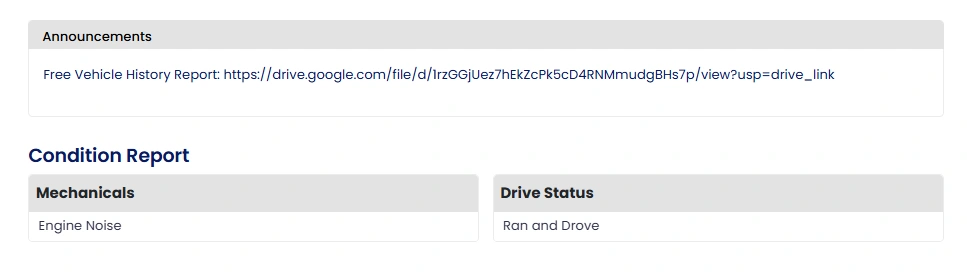
- Buying blind: you cannot inspect a car from Vilnius, so use listings with real photos, an inspection report and a vehicle history report.
Comparing markets? See our guides to exporting cars to Poland, Germany and Ukraine.
Where to buy US cars for export
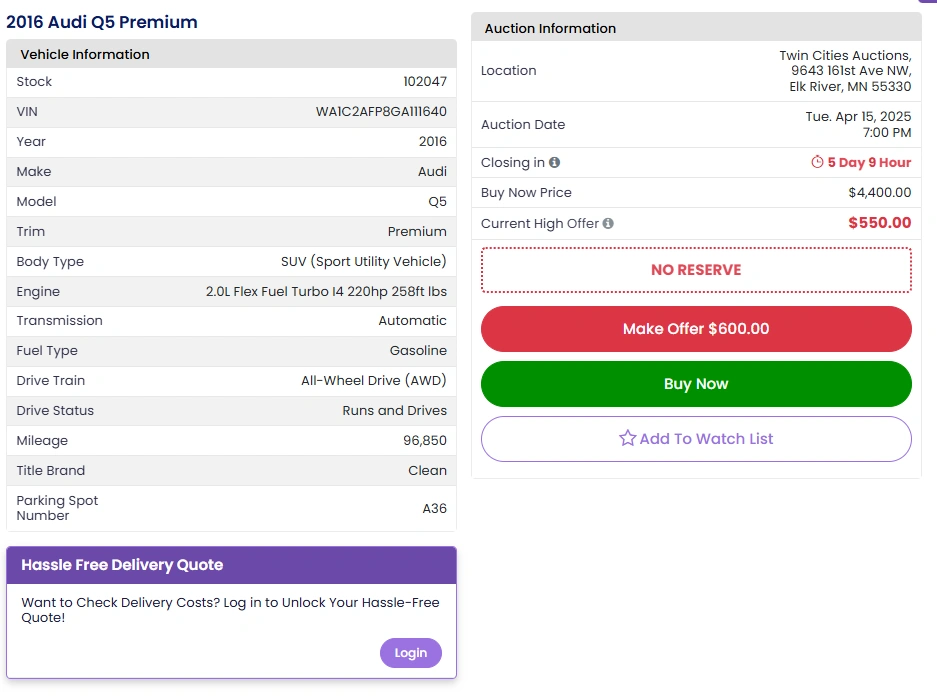
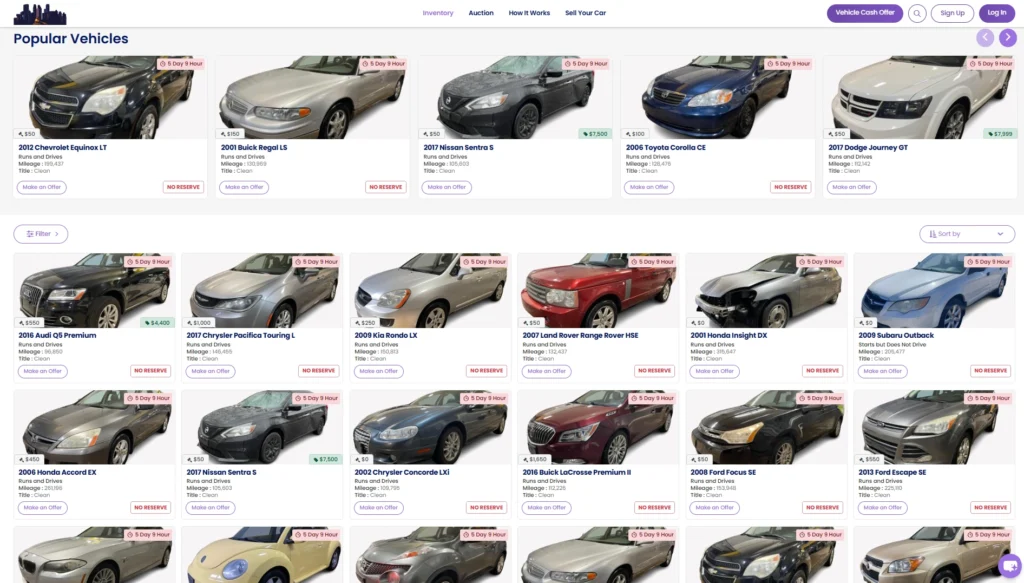
Your margin is made at the purchase. Remarket Space is an online car auction open to everyone, including dealers, repair shops and the general public. You sign up free, with no dealer license and no membership fee, and bid online from anywhere. Every listing has an inspection by a Verified Remarket Space Inspector, a free Carfax and an HD virtual test drive, so you can judge a car without seeing it. The listing shows the out-the-door price with US delivery quoted, and cars come from the Twin Cities area and the St. Louis area. You handle export and freight from there.
See cars up for auction now, browse St. Louis-area cars or cars under $5,000, and read how it works and the buyer fees first.
Frequently asked questions
Lithuania applies the EU tariff. Passenger cars pay a 10% third-country duty. Since July 1, 2026, the EU TARIC database shows a 0% tariff preference for cars of US origin, which means cars made in the US, not just bought there.
Import VAT is 21%, Lithuania’s standard rate. It is charged on the customs value plus any duty and the transport and insurance costs up to the first place of destination. VAT registered traders may be able to recover it.
Yes. Regitra charges a motor vehicle registration tax on passenger cars with CO2 emissions above 130 g/km. The rate depends on the fuel type, and the tax must be paid before registration is completed. Regitra has an online calculator for an estimate.
CBP requires Electronic Export Information filed in AES for every used vehicle, plus ownership documents such as the original title. Both, with the AES Internal Transaction Number, go to the port of export at least 72 hours before the car leaves.
Often. Cars from outside the EU need a conformity assessment by an approved expert company before Regitra will register them, plus a roadworthiness test and insurance. US lighting and equipment can need changes, so check the model first.
No. Remarket Space sells cars at online auction and delivers within the US, with the delivery quote on each listing. Buyers arrange international freight, export filings and customs clearance themselves, usually through a freight forwarder.
Sources
- European Commission: TARIC database (code 8703 23 90 00, origin US)
- State Tax Inspectorate (VMI): Value added tax
- Ministry of Finance of Lithuania: Value added tax
- VMI: VAT treatment of used car sales
- European Commission: VAT taxable amount on imports
- Regitra: Registration tax fee
- Regitra: I have purchased a vehicle imported from abroad
- Lithuanian Customs: Regarding the export of vehicles to Belarus
- US Customs and Border Protection: Exporting used vehicles
- Statistics Lithuania: official trade data
- Remarket Space: How it works
General information, not legal or tax advice. Tariffs, sanctions and registration rules change, so confirm with a customs broker and the official sources above before you buy.