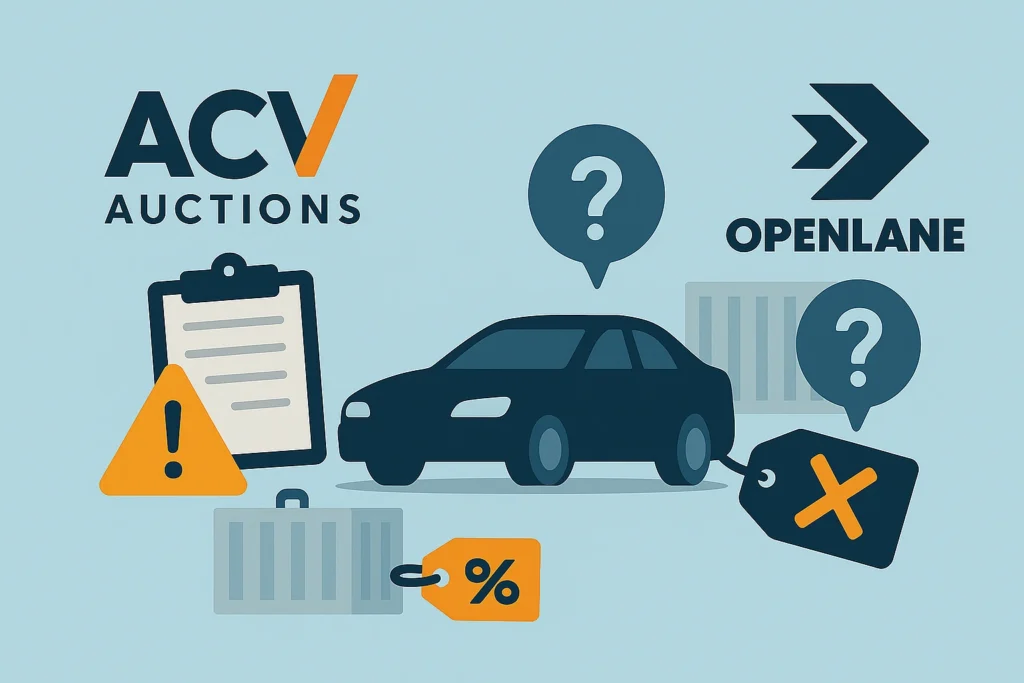
You found a car on ACV Auctions or OpenLane, or someone offered to buy one for you there, and the reviews made you nervous. Fair question. Here is the straight answer: both are real, established wholesale auction companies, not scams. The real risks are dealer-only access, buyer fees you cannot see until you log in, and arbitration rules that decide what happens when a car shows up with a problem.
No dealer license? You cannot buy on ACV or OpenLane, but you can bid on inspected cars in this week’s Remarket Space auction, with the buyer premium shown before you bid.
ACV Auctions is not a scam. It is a dealer-only wholesale marketplace that Copart bought for $10.50 a share, closing October 16, 2026. OpenLane, formerly KAR Auction Services, trades on the NYSE as OPLN. Most complaints are about arbitration denials and condition reports, not fraud. ACV gives buyers 10 calendar days from the sale date to file arbitration.
Updated November 1, 2026. Checked against ACV’s Terms of Service and support articles, OpenLane’s buyer FAQ and help center, OPENLANE Inc.’s 2025 Form 10-K, and ACV’s October 2026 Form 8-K with the SEC.
Key takeaways
- Both are legitimate: ACV is now a Copart subsidiary, and OpenLane is a NYSE-listed company that reported about 1.5 million vehicle transactions a year in its 2025 annual report.
- Neither is open to the public: ACV’s terms require a licensed or authorized dealer in good standing, and OpenLane asks for a dealership license before you can even browse.
- Buyer fees are tiered and hidden behind a login: ACV’s fee is a percentage or flat amount based on the sale price, and the full schedule sits inside your MyACV account.
- Complaints center on arbitration: public reviews mostly describe denied claims and condition reports that missed a problem, not stolen money.
- The real scams impersonate them: fake brokers and look-alike payment emails are the fraud to watch for.
Is ACV Auctions legit?
Yes. ACV Auctions runs a business-to-business online marketplace where dealers buy and sell wholesale vehicles. It was a public company until Copart, the salvage auction giant, bought it. Copart agreed to pay $10.50 per share in cash in September 2026, and ACV’s SEC filing confirms the merger closed on October 16, 2026. ACV now operates as a Copart subsidiary.
That is why you may see searches like “is ACV Auctions selling” or “Copart acquires ACV.” The company did not shut down. It changed owners, and the marketplace still runs under the ACV name.
Want the same question answered for the salvage side? Read whether Copart and IAAI are scams.
Is OpenLane legit?
Yes. OPENLANE, Inc. is the former KAR Auction Services, based in Carmel, Indiana. It changed its NYSE ticker from KAR to OPLN in December 2025. Its 2025 annual report describes about 1.5 million vehicle transactions a year, with buyers who are mainly franchise and independent dealers.
OpenLane says 100% of its vehicles get a detailed inspection and test drive, and reports include AI damage detection, an engine noise recording, OBD2 codes and a free AutoCheck. For the Minnesota angle, see what OpenLane requires in Minnesota and the no-license option.
Is ACV Auctions open to the public?
No. ACV’s Terms of Service describe the platform as business-to-business and require buyers to be a licensed or duly authorized motor vehicle dealer in good standing. OpenLane works the same way: its buyer FAQ asks for your dealership license and driver’s license before you can browse inventory.
So if a stranger offers to buy you a car “on ACV” for a fee, be careful. That is a broker arrangement, and fake brokers are one of the real scams in this space. Our guide on where the public can buy auction cars covers the legitimate options.
What are ACV buyer fees?
ACV charges a buy fee on every purchase. Its support article says the standard fee is either a percentage of the sale price or a flat rate, depending on which price tier the car falls in. Some featured seller events use a flat buy fee instead, with $100 per vehicle given as an example. The fee is disclosed at checkout before you confirm.
The catch: ACV moved its full fee schedule into MyACV, the logged-in dealer account. Its public pricing page only links there. So any “ACV buyer fees 2026” chart you find on a third-party site is unofficial and may be out of date. If you are a dealer, pull the schedule from MyACV and add the buy fee, transport and any protection product to your max bid before you bid.
What are OpenLane buyer fees?
OpenLane’s help center says its buy fee depends on the purchase price and includes title transfer and escrow. Like ACV, the exact tiers are shown to registered dealers. Floorplans other than AFC or NextGear carry an extra administrative fee per purchase, according to its buyer FAQ.
What a published fee table looks like
If you want to see every fee before you register, Remarket Space prints its full schedule on the buyer premium and fees page. A few examples:
| Sale price | Buyer premium | Administrative fee |
|---|---|---|
| $1,999 to $2,499 | $459 | $189 |
| $4,999 to $6,999 | $629 | $209 |
| $9,999 to $14,999 | $799 | $209 |
| $15,000 and up | 7% of price | $249 |
For a wider look at what auctions add on top of the hammer price, read auction fees and extra costs explained.
What do ACV Auctions complaints and reviews say?
ACV has only a small number of public reviews on Trustpilot (25 as of November 1, 2026), and they skew negative. Read them and a pattern shows up. Almost none say money vanished. They say:
- Condition reports missed something: a car shown as clean arrived with an engine, transmission or frame problem.
- Arbitration claims were denied: the buyer felt the problem was undisclosed, and ACV did not agree.
- Transport was slow or caused damage: delivery windows slipped or the car arrived scratched.
- Fees and paid protection felt high: some buyers say they needed a paid add-on to get a claim taken seriously.
Those are business disputes, not fraud. They are also exactly why the arbitration rules below matter more than the star rating.
How does ACV arbitration work?
Arbitration is how you file a claim when a car has a problem that was not disclosed at sale. ACV’s rules, from its support articles:
- Standard window: 10 calendar days from the sale date, and the sale date counts as day one.
- One claim per auction: you get a single claim no matter how it turns out, so list every issue at once.
- Wear is not covered: wearable parts like clutches, belts, hoses, batteries and suspension parts, plus normal wear judged against 15,000 miles a year, are excluded.
- Remedy without protection: ACV covers part of the repair cost.
- Purchase Protection+: an optional product that adds 10 more calendar days and lets you choose payment or unwinding the sale. ACV’s terms exclude cars sold for $75,000 or more, cars with 175,000 miles or more, electric vehicles and a few other types.
- Extended Assurance: adds 10 or 20 calendar days, but cannot be combined with Purchase Protection.
OpenLane’s version is called the As Described Guarantee. Its buyer FAQ says it runs 5 days from purchase, or 7 days from delivery if you use OpenLane transport, and you have to purchase it.
ACV vs OpenLane: side by side
| Question | ACV Auctions | OpenLane |
|---|---|---|
| Who owns it | Copart, since October 16, 2026 | OPENLANE, Inc. (NYSE: OPLN), formerly KAR |
| Who can buy | Licensed or authorized dealers | Dealers with a verified dealership license |
| Buyer fee | Percentage or flat rate by price tier, schedule in MyACV | Depends on price, includes title transfer and escrow |
| Claim window | 10 calendar days from sale, longer with paid add-ons | As Described Guarantee: 5 days from purchase or 7 from delivery, if purchased |
| Payment | Checkout within 24 hours, payment within 2 business days | Not listed in its public buyer FAQ |
Comparing more names? See Manheim vs Remarket Space, whether ADESA is open to the public and ACV Auctions vs Remarket Space in Minnesota.
The real scams to watch for
- Fake brokers: someone promises access to ACV or OpenLane, takes a deposit and disappears. Verify any broker’s dealer license with your state and get everything in writing.
- Look-alike payment emails: wire instructions from a domain that is one letter off. Pay only through the official checkout inside the platform.
- Listings that rush you off the site: a seller who wants to close outside the marketplace loses you every protection the platform offers.
More warning signs are in our list of 10 red flags in online car auctions.
What to check before you bid anywhere
1. Read the claim window in writing. Know how many days you have, when the clock starts and what is excluded before you place a bid.
2. Run the VIN. Check title brands and history with a report. Our vehicle history report guide shows what to look for.
3. Price in every fee. Buyer fee, admin or title fee, transport, tax and any protection add-on. Set your max bid on the total, not the hammer price.
4. Inspect the moment the car arrives. Use a pre-bid inspection checklist, take photos and video at delivery, and file inside the window.
If a car still goes wrong, our guide to car auction refund and return policies explains what each type of auction usually allows.
Buy without a dealer license at Remarket Space
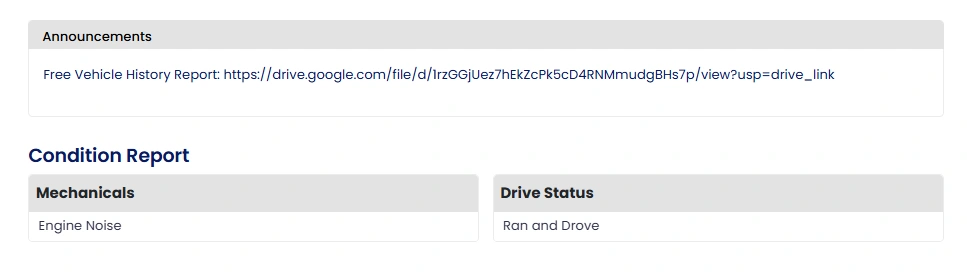
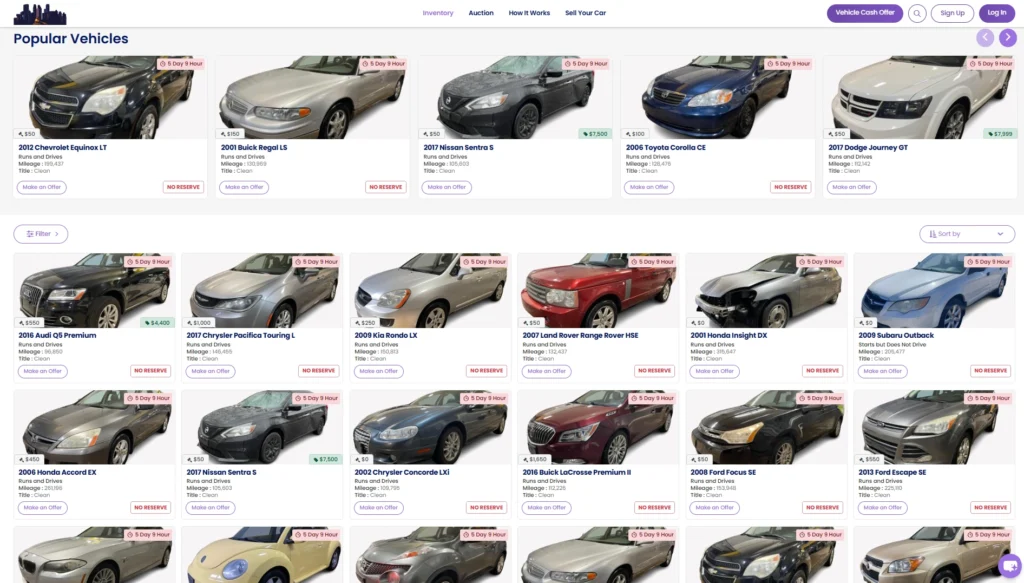
ACV and OpenLane are solid tools if you hold a dealer license. If you do not, Remarket Space is an online auction open to the public. You register with a government photo ID and a card on file, then bid, make an offer or use Buy Now. Every listing has an inspection by a Verified Remarket Space Inspector and a free Carfax. The protection is in writing too: a 3-Day Major Mechanical Guarantee covers undisclosed engine, automatic transmission, frame and flood damage reported within 72 hours of delivery, and title issues are guaranteed for life. Fees are published before you register, and cars are delivered from the Twin Cities area.
Browse the current auction, read how bidding works here, or shop by make: Ford, Chevrolet and Toyota.
ACV Auctions and OpenLane FAQ
No. ACV Auctions is a legitimate dealer-to-dealer wholesale marketplace. Copart bought it for 10.50 dollars a share, and the deal closed on October 16, 2026. Most complaints are about arbitration decisions and condition reports, not fraud.
Yes. OPENLANE, Inc. is the former KAR Auction Services and trades on the New York Stock Exchange as OPLN. Its 2025 annual report describes about 1.5 million vehicle transactions a year, mostly to franchise and independent dealers.
No. ACV’s Terms of Service say buyers must be a licensed or duly authorized motor vehicle dealer in good standing. OpenLane also asks for a dealership license before you can browse inventory.
ACV charges a buy fee that is either a percentage of the sale price or a flat rate, depending on the price tier. Some featured events use a flat fee such as 100 dollars per vehicle. The full schedule is inside the logged-in MyACV account.
The standard window is 10 calendar days from the sale date, which counts as day one. Purchase Protection+ adds 10 more days, and Extended Assurance adds 10 or 20 days. The two add-ons cannot be combined.
Yes. Copart agreed in September 2026 to buy ACV for 10.50 dollars per share in cash. ACV’s SEC filing says the merger was completed on October 16, 2026, and ACV now runs as a Copart subsidiary.
Remarket Space is an online car auction open to the public. You sign up with a government photo ID and a card on file, then bid on inspected cars with a free Carfax, published fees and a 3-Day Major Mechanical Guarantee.
Sources
- ACV terms: ACV Auctions Terms of Service
- ACV fees: Understanding Buyer Fees
- ACV arbitration: How the arbitration window works, what is not covered and Purchase Protection terms
- Copart deal: ACV Form 8-K on completion of the merger
- OpenLane company facts: OPENLANE, Inc. 2025 Form 10-K
- OpenLane buying: Top 10 FAQs About Buying Wholesale on OPENLANE and What are the buy fees?
- Reviews: ACV Auctions on Trustpilot
- Remarket Space: How It Works, Pricing and Fees and 3-Day Guarantee
General information, not legal advice. Platform terms change, so confirm current rules with ACV or OpenLane before you buy.