








Understanding Your Audience Landscape
To create content that truly resonates, you must first possess a profound understanding of the very people you aim to reach. This isn’t just about general demographics; it’s about delving deep into their motivations, needs, and behaviors. The clearer your picture of your audience, the more targeted and effective your minimalist content strategy can become.
Defining Your Core Persona
Before a single word is written or an image designed, a foundational step in strategic content creation is the meticulous definition of your core persona. This detailed profile serves as your guiding star, ensuring every piece of content speaks directly to the right individual.
Demographics
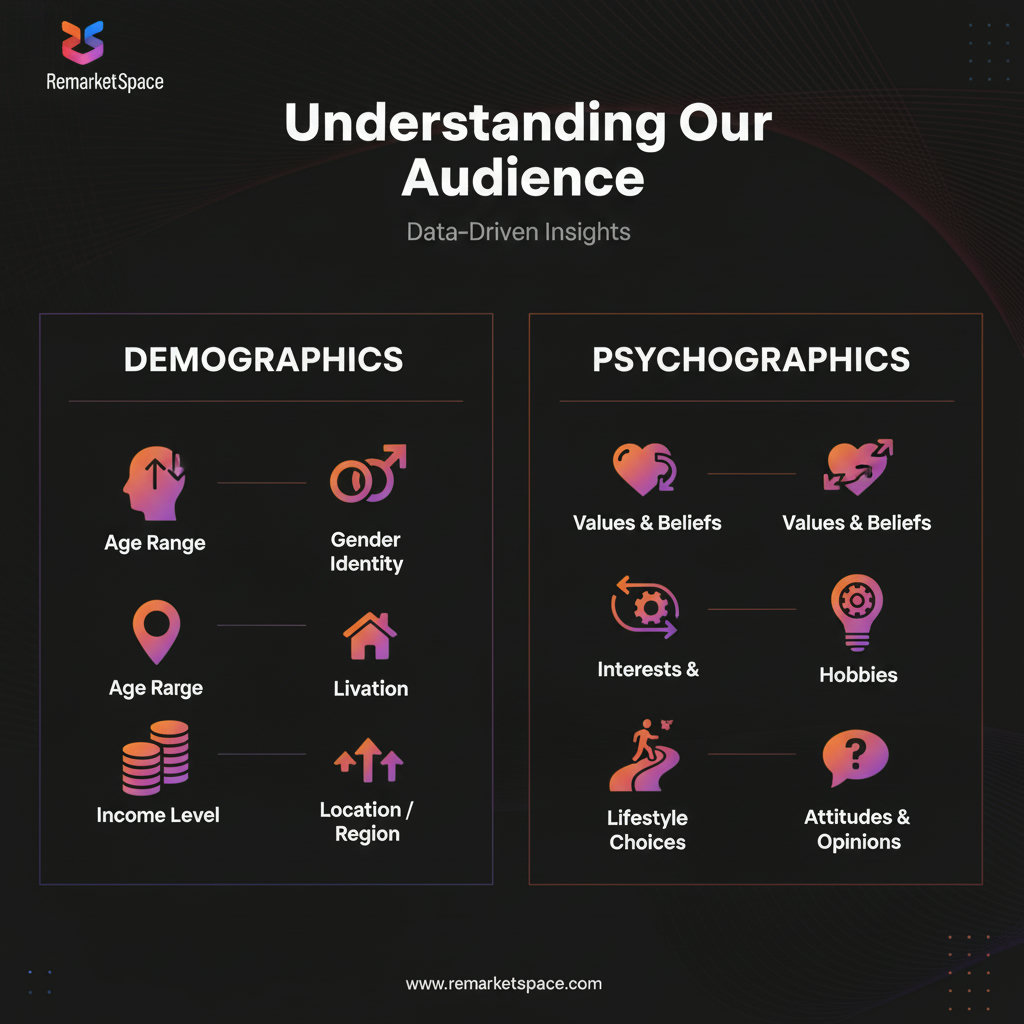
Start with the basics. Who are they? Where do they live? Understanding demographic data like age, gender, income level, education, and geographic location provides a broad sketch of your audience. This information helps tailor language, references, and even the platforms you use to reach them. For instance, content for a younger, tech-savvy demographic might lean heavily on social media platforms and visual formats, while a professional audience might respond better to LinkedIn articles or in-depth whitepapers.
Psychographics
Beyond the numbers, psychographics delve into the ‘why’ behind your audience’s actions. What are their values, beliefs, interests, and lifestyles? What motivates them? What are their aspirations? Understanding these deeper psychological traits allows you to craft messages that align with their worldviews, speak to their passions, and resonate on an emotional level. This is where you uncover the stories that will truly connect.
Audience Needs Assessment
Once you know who your audience is, the next crucial step is to identify what they need. Content that solves problems or fills knowledge gaps inherently provides value and fosters engagement. This assessment isn’t a one-time task but an ongoing process of listening and learning.
Pain points
What challenges do your audience members face? What problems are they trying to solve in their personal or professional lives? Identifying these pain points is critical. Your content’s primary role often is to offer solutions, comfort, or guidance related to these issues. For example, if your audience struggles with complex financial planning, your content could simplify concepts or offer practical tools.
Information gaps
Where is the missing knowledge? What questions do they have that aren’t being adequately answered elsewhere? These information gaps represent prime opportunities for you to establish yourself as an authoritative and helpful resource. This could involve debunking myths, explaining complex topics in simple terms, or providing detailed how-to guides. Identifying these gaps allows you to create highly valuable, sought-after content.
Competitive Content Audit
To stand out, you need to know who you’re up against and what they’re doing well – or not so well. A thorough competitive content audit reveals opportunities for differentiation and improvement.
Competitor strengths
What content are your competitors producing that performs well? What topics do they cover extensively? What formats do they utilize effectively? Analyze their successes to understand what resonates within your shared niche. This isn’t about replication, but about identifying best practices and areas where market demand is strong.
Weaknesses
Equally important is pinpointing where your competitors fall short. Are there topics they neglect, questions they leave unanswered, or formats they underutilize? Do they have gaps in the customer journey support? These weaknesses represent significant opportunities for you to fill the void, provide superior insights, or offer a unique perspective that carves out your own space. This could even extend to analyzing their approach to things like a speedway auto auction if that’s a segment they or you target, finding what angles they cover or miss.
Crafting Your Core Message
With a comprehensive understanding of your audience and the competitive landscape, the next phase involves distilling this knowledge into a powerful and clear core message. This message will underpin all your minimalist content efforts, ensuring consistency and impact.
Unique Value Proposition
At the heart of your content strategy lies your unique value proposition (UVP). This is what sets you apart and why your audience should listen to you and engage with your offerings.
Key differentiators
What makes your brand, product, or service distinctive? Is it your specialized expertise, innovative approach, unparalleled customer service, or a particular niche you serve? Clearly articulating these differentiators allows your content to highlight what truly makes you special, moving beyond generic statements and offering compelling reasons for engagement. This is especially vital when discussing niche concerns, such as how to navigate a speedway auto auction effectively compared to general market advice.
Brand promise
Your brand promise is the commitment you make to your audience. What can they consistently expect from you? Whether it’s reliability, innovation, community, or empowerment, this promise should be reflected in all your content. It builds trust and sets expectations, shaping the audience’s perception and fostering loyalty.
Thematic Pillars
To maintain focus and consistency, your content strategy should be built upon a foundation of thematic pillars. These are the broad, overarching topics that your content will consistently address.
Core topics
These are the central themes directly related to your niche, industry, or expertise. For example, if you offer financial advice, core topics might include “investment strategies,” “retirement planning,” and “debt management.” These topics ensure your content remains relevant and tightly focused on your audience’s primary interests. If your work involves vehicle acquisition, then understanding the nuances of a speedway auto auction would certainly be a core topic.
Evergreen themes
Beyond trending topics, evergreen themes are those that remain relevant over time, providing lasting value. Content built around these themes has a longer shelf life, continually attracting and engaging your audience without constant updates. Examples include “beginner guides,” “fundamental principles,” or “best practices” in your field. These pieces serve as foundational resources, much like a comprehensive guide to understanding the entire process of a public auto auction.
Desired User Action
Every piece of content, minimalist or elaborate, should lead to a desired outcome. Defining this action upfront is crucial for measuring success and ensuring your content serves a strategic purpose.
Conversion goals
What specific actions do you want users to take after consuming your content? This could be signing up for a newsletter, downloading an e-book, making a purchase, or requesting a demo. Clearly defined conversion goals enable you to design content with a clear call to action and measure its effectiveness in driving business objectives.
Engagement metrics
Beyond direct conversions, what engagement signals indicate successful content? This might include time on page, shares, comments, likes, or click-through rates to related content. These metrics help you understand how well your content resonates and keeps your audience interested, even if they aren’t immediately converting. They also provide valuable insights for future content optimization.
Designing Minimalist Content Formats
With a clear message and a deep understanding of your audience, the focus shifts to designing content that is impactful yet concise. Strategic minimalism isn’t about less effort; it’s about maximizing impact through thoughtful execution.
Selecting Optimal Channels
The platform through which your content is delivered is as critical as the content itself. Choosing the right channels ensures your message reaches your audience where they are most receptive.
Platform suitability
Different platforms excel at different types of content. A TikTok video, a LinkedIn article, and an email newsletter each serve distinct purposes and reach audiences in different mindsets. Assess which platforms are best suited for your minimalist content formats and align with your brand’s voice and objectives.
Audience presence
Where does your target audience spend their time online? There’s no point in creating brilliant content if your audience never sees it. Prioritize channels where your core persona is actively engaged and receptive to the type of content you’re producing. This might mean investing heavily in Instagram if you’re targeting young creatives, or focusing on industry forums for specific technical audiences. For example, discussions around the intricacies of a speedway auto auction would likely thrive in niche automotive dealer communities.
Prioritizing Content Types
Minimalism in content creation means choosing the most effective formats that deliver maximum value with minimal fluff. This requires strategic prioritization.
High-impact formats
Which content types consistently deliver strong results for your specific goals? This could be short-form videos explaining complex concepts, highly visual infographics, concise blog posts answering specific questions, or compelling social media snippets. Focus on formats that allow you to convey your core message clearly and quickly. Consider the power of a well-designed case study or a concise tutorial.
Efficiency considerations
Beyond impact, consider the resources required to produce different content types. Minimalist content often prioritizes formats that are efficient to create, update, and distribute, without sacrificing quality. This could mean repurposing existing long-form content into bite-sized summaries, creating templates for consistent visual assets, or leveraging user-generated content.
Structuring for Clarity
Minimalist content thrives on clarity. Its effectiveness lies in how easily and quickly the audience can digest and understand the core message.
Scannability principles
In today’s fast-paced digital world, users often scan content before reading it in detail. Employ tactics like clear headings, short paragraphs, bullet points, bolded text, and ample white space to make your content highly scannable. This ensures that even a quick glance can convey the essence of your message.
Information hierarchy
Structure your content logically, presenting the most important information first and progressively revealing more detailed points. Use headings and subheadings to guide the reader through the material, making complex topics easier to follow. A clear hierarchy helps users quickly find the information they need, especially when they’re looking for specific details, perhaps about attending a speedway auto auction or tips for bidding.
Amplifying and Analyzing Impact
Creating resonant content is only half the battle. To truly succeed, you must strategically amplify its reach and rigorously analyze its performance to ensure continuous improvement.
Distribution Strategy
Even the most perfectly crafted minimalist content needs a robust distribution strategy to reach its intended audience and maximize its impact.
Organic reach
Leverage search engine optimization (SEO) to ensure your content is discoverable through relevant search queries. Share your content strategically across your social media channels, email newsletters, and community forums. Encourage sharing and engagement from your existing audience to expand your organic footprint. Optimize for keywords like “speedway auto auction” if that’s a key area you cover, to ensure your insights appear in relevant search results.
Paid promotion
Supplement your organic efforts with targeted paid promotion where appropriate. This could include social media advertising, search engine marketing, or sponsored content placements. Paid promotion allows you to reach a highly specific audience segment, accelerate visibility, and test different messaging approaches to optimize for conversions and engagement. According to a Forrester study, brands that integrate paid and organic strategies see significantly higher ROI.
Performance Measurement
Without clear metrics, you can’t truly understand if your minimalist content is having the desired effect. Regular analysis is non-negotiable for success.
Key KPIs
Define specific Key Performance Indicators (KPIs) that align with your content goals. These might include website traffic, engagement rates (likes, shares, comments), conversion rates, lead generation, brand mentions, or customer journey progression. Tracking these KPIs provides tangible data on content effectiveness.
Analytical tools
Utilize various analytical tools to gather and interpret your data. Google Analytics, social media insights, email marketing platform reports, and CRM data can all provide valuable information about how your content is performing. Learning to use these tools effectively is crucial for data-driven content decisions.
Iterative Optimization
The process of creating resonant content is never truly finished. It’s an ongoing cycle of creation, analysis, and refinement.
Feedback loops
Actively seek feedback from your audience through surveys, comments, social media interactions, and even direct conversations. Pay attention to what they say they like, what they find confusing, and what questions they still have. This direct input is invaluable for refining your content. A good example of direct feedback to act on would be if users are consistently asking for specific details about the bidding process at a speedway auto auction. Similarly, Hootsuite’s blog frequently emphasizes the importance of social listening for content refinement.
Content refresh
Periodically review and update your existing content to ensure its accuracy, relevance, and performance. Refreshing older, high-performing content can boost its SEO, extend its lifespan, and provide renewed value to your audience. This iterative approach ensures your minimalist content strategy remains agile, effective, and continuously improved.
FAQ Section
What is strategic minimalism in content creation?
Strategic minimalism in content creation is an approach focused on delivering maximum value and impact with the fewest possible elements. It involves carefully selecting content topics, formats, and channels to ensure every piece is highly intentional, concise, and directly addresses audience needs and business goals, avoiding unnecessary fluff.
How does defining core personas help create resonant content?
Defining core personas (demographics and psychographics) helps you understand who your audience is, what motivates them, their pain points, and how they consume information. This deep understanding enables you to tailor your content’s language, tone, topics, and distribution channels to speak directly to their needs and interests, making it much more likely to resonate.
Why is a competitive content audit important for a minimalist strategy?
A competitive content audit is crucial because it reveals what your competitors are doing well and where they are falling short. By identifying their strengths, you learn best practices; by pinpointing their weaknesses, you find opportunities to develop unique, high-value content that fills market gaps and differentiates your brand, often with a more focused, minimalist approach.
What role do “thematic pillars” play in content strategy?
Thematic pillars are core, overarching topics that your content consistently addresses. They ensure focus, consistency, and depth in your content strategy, helping you to build authority and provide sustained value to your audience. These pillars guide content creation, making sure all efforts align with your brand’s expertise and audience interests, avoiding scattered or irrelevant content.
How can I measure the success of minimalist content?
Measuring the success of minimalist content involves tracking key performance indicators (KPIs) such as website traffic, engagement metrics (likes, shares, comments), conversion rates, lead generation, and time on page. Utilizing analytical tools like Google Analytics and social media insights helps you gather data and understand how well your concise content is performing against your defined goals.
What’s the difference between organic and paid content promotion?
Organic promotion involves unpaid methods to increase content visibility, such as SEO, social media sharing, email newsletters, and community engagement. Paid promotion, on the other hand, involves investing money in advertising platforms (e.g., social media ads, search engine marketing) to specifically target audiences and accelerate reach. Both are vital for a comprehensive content distribution strategy.